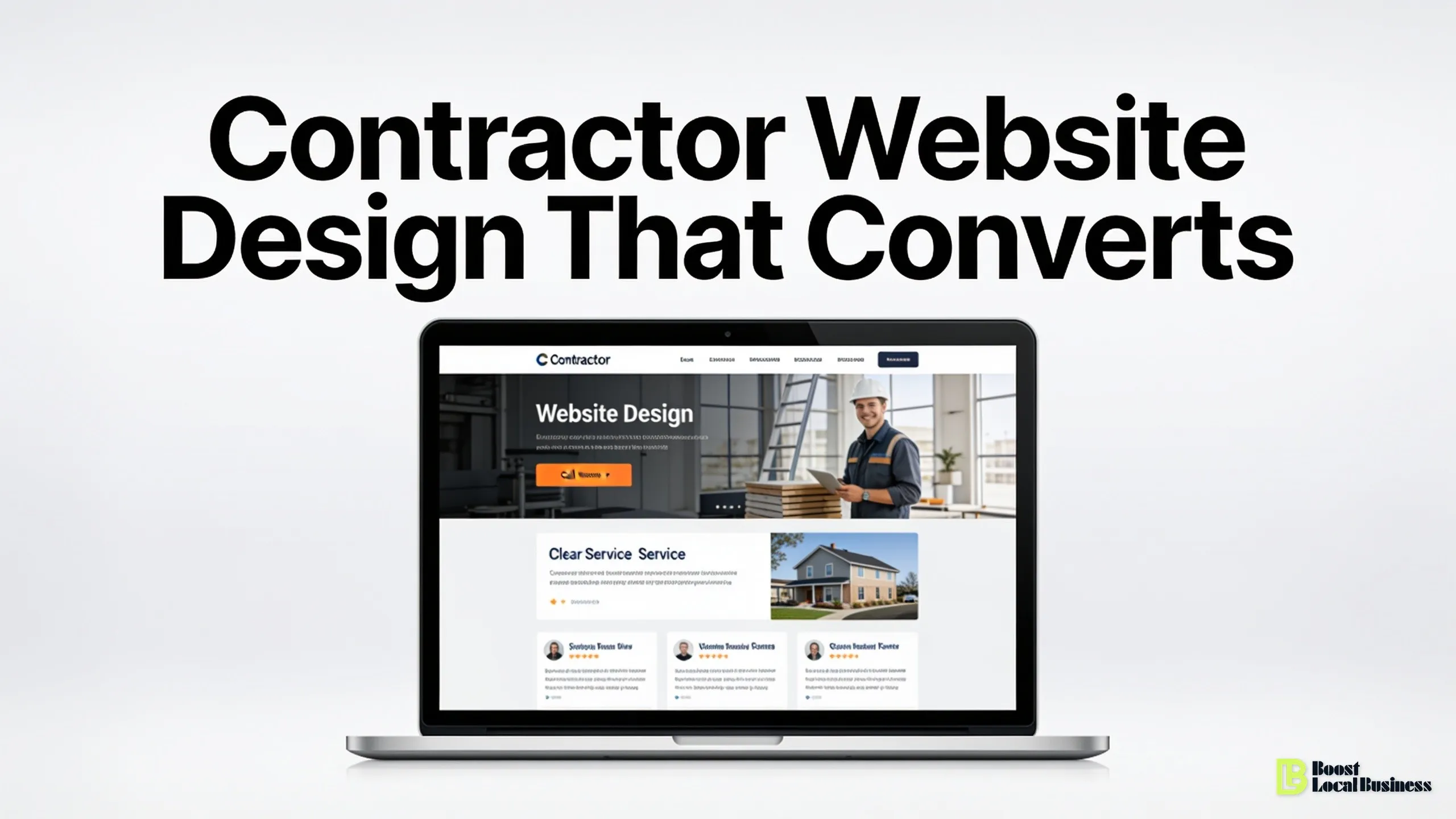
Contractor Website Design That Converts
By Boost Local Business — By Social Master Editorial Team · Updated 2026-07-14
Conversion-focused contractor website design transforms contractor websites into lead-generation engines by combining mobile-friendly layouts, clear calls to action, and performance-driven structure. Boost Local Business delivers digital marketing solutions built around measurable outcomes, helping contractors move beyond basic templates toward websites that consistently turn visitors into paying customers.
Conversion-Focused Strategies by Boost Local Business
- Conversion-focused design prioritizes performance over aesthetics, guiding users toward clear decisions and actions.
- Traditional web design informs visitors, but conversion-focused contractor websites actively capture and convert leads.
- Boost Local Business, based in Alliston, ON, delivers contractor websites built specifically to maximize lead generation.
- A team of 5 specialists manages mobile-friendly, WordPress-based websites with ongoing support for home service contractors.
What Prerequisites Does a Contractor Website Need?
A contractor website design project requires three foundational elements before a single page goes live: mobile compatibility, conversion-focused architecture, and local SEO readiness. Skipping any one of these prerequisites leaves contractors invisible to prospects or unable to convert the traffic they do earn.
Does a Contractor Website Need to Be Mobile-Friendly?
A barrie contractor site must perform flawlessly across every device a potential client uses. Mobile-friendly design is not optional — it is a baseline expectation. Contractors who launch without it lose visitors the moment a page loads slowly or displays incorrectly on a phone.
What Makes a Website Conversion-Ready Before Launch?
A conversion-focused contractor website shifts the design priority from visual polish to guided decision-making. Before launch, contractors must confirm these structural prerequisites are in place:
- Establish a clear CTA hierarchy — place primary calls to action where momentum naturally carries visitors.
- Sequence content intentionally — arrange information to address hesitation and move prospects toward contact.
- Streamline all forms — reduce friction so inquiries are completed quickly.
Local SEO readiness rounds out the prerequisites. Contractors must complete a Google Business Profile review and conduct a local keyword opportunity analysis before the site launches. Without that groundwork, even a well-designed site struggles to surface in local search results.
How Do You Build a High-Converting Contractor Site?
Building a conversion-focused contractor website starts with one foundational shift in thinking: the site must function as a salesperson, not a brochure. A brochure presents information passively. A salesperson guides visitors toward a decision and addresses hesitation at every stage of the process.
Follow these steps to build a site that converts:
- Establish mobile-first design. Most local searches happen on smartphones. A mobile-first layout ensures the site loads fast and displays cleanly on every screen size.
- Structure content for conversion. Place clear calls-to-action above the fold, sequence content to build trust, and reduce friction in contact forms.
- Build an SEO-friendly architecture. Organize pages around service categories and geographic targets so search engines can index and rank the site effectively.
- Integrate trust signals. Add reviews, project photos, licenses, and certifications to reduce visitor hesitation at every scroll point.
- Adopt current design standards. Responsive layouts and emerging technologies like AI-driven personalization give contractors a measurable competitive edge — especially in fast-evolving local markets.
What Makes a Barrie Contractor Site Different From a Generic Template?
A Barrie contractor site must reflect the local market’s specific competitive dynamics. The digital landscape in Barrie evolves rapidly, meaning generic templates quickly fall behind local user expectations and search behavior. Localized design paired with current trends keeps a contractor’s site relevant and visible. For a deeper look at what those trends involve, see Top 7 Web Design Trends in Barrie You Need to Know.
Why Does Contractor Website Design Affect Revenue Directly?
Strong contractor website design combines mobile-first structure, conversion-driven layouts, and SEO-friendly architecture to turn casual visitors into paying clients. Boost Local Business delivers this complete package — pairing conversion-focused websites with local SEO and paid advertising under one partner. So contractors convert clicks into calls and build sustainable revenue.

How Do You Optimize and Troubleshoot After Launch?
Post-launch optimization for a barrie contractor site centers on three pillars: local search visibility, technical health, and ongoing performance monitoring. Skipping these steps leaves qualified leads in the service area going to competitors instead.
What Should Contractors Do First After Launch?
Start with a structured audit. Follow these steps in order:
- Request a local SEO audit with personalized, actionable growth recommendations to identify exactly what is suppressing rankings and lead generation.
- Claim and optimize the Google Business Profile to improve Google Maps rankings and increase visibility among local searchers actively looking for contractors.
- Activate ongoing website management, including security monitoring and performance checks, to keep the site stable and fast.
For contractors ready to go deeper on search visibility, Unleash Growth: SEO for Construction Companies Revealed outlines the strategies that drive sustainable rankings in competitive local markets.
How Does a Contractor Website Stay Competitive Over Time?
A strong contractor website design is not a one-time project. Sustained local search visibility requires consistent attention to rankings, content, and technical performance. For home services businesses especially, ongoing management directly protects the lead pipeline that a conversion-focused contractor website was built to generate. Neglect post-launch maintenance, and even a well-built site loses ground steadily.
Website Maintenance Services: Ensuring Longevity and Performance
Maintaining a contractor website is vital to protect its lead generation capabilities and technical health. Website maintenance services encompass a range of proactive tasks designed to ensure security, performance, and relevancy — critical for tradespeople competing in local Ontario markets.
Security Updates
Security updates are essential for protecting contractor websites from evolving cyber threats. These updates typically involve applying patches to the WordPress core system, plugins, and themes to fix known vulnerabilities and prevent unauthorized access. The technical process includes monitoring for new security advisories, scheduling updates during low-traffic periods to minimize disruption, and occasionally testing patches on staging environments before live deployment. Regular security updates help prevent malware infections, hacking attempts, and data breaches, thereby safeguarding both the contractor’s digital reputation and sensitive client information collected through contact forms.
Backups
Reliable backups are a cornerstone of website resilience. Maintenance services implement automated, scheduled backups that capture the full website state, including files, databases, and configured settings. These backups are stored securely offsite or within cloud environments to avoid data loss from server failures or cyber incidents. In a technical context, backup solutions often leverage incremental methods to optimize storage and reduce server load, while ensuring rapid recovery when needed. The ability to quickly restore the site from recent backups minimizes downtime, protects business continuity, and mitigates the impact of any data corruption or accidental content deletion.
Speed Optimization
Website speed optimization directly impacts user experience and search engine rankings. Maintenance includes a suite of technical enhancements such as image compression to reduce file size without sacrificing quality, minification of CSS, JavaScript, and HTML files to streamline code delivery, and leveraging browser caching to serve stored copies quickly on repeat visits. Additionally, server-side optimizations like content delivery network (CDN) integration distribute content globally, reducing latency for users in different locations. Ongoing speed audits identify bottlenecks, enabling iterative improvements that keep the site performant, especially on mobile devices where connection speeds may vary widely.
Content Updates
Keeping website content current and relevant is critical for SEO and user engagement. Maintenance teams regularly update service descriptions to reflect new offerings or changes in business focus, ensuring accuracy and competitiveness. Adding fresh project photos showcases recent work, providing social proof and visual appeal. Testimonials are updated to maintain authenticity and seasonal or promotional calls-to-action are refreshed to capitalize on timely marketing opportunities. Technically, content updates involve managing the content management system (CMS) efficiently, ensuring proper formatting, SEO metadata optimization, and alignment with overall site architecture for maximum discoverability.
Ongoing Monitoring and Support
Proactive monitoring identifies technical issues such as broken links, slow page loading, security breaches, or server errors before they impact users. Advanced monitoring tools track website uptime, performance metrics, and security status in real time, triggering alerts for rapid response. Support teams provide expert troubleshooting, routine maintenance, and strategic recommendations to adapt the website as technology and user expectations evolve. This ongoing care ensures contractors can focus on their core services while maintaining a robust, trustworthy online presence.
Conversion-Focused Design Elements Tailored for Ontario Tradespeople
Tradespeople in Ontario face unique market dynamics that demand website design elements addressing regional trust factors, local user behavior, and mobile usage patterns. Integrating these elements enhances visitor confidence and encourages immediate contact.
Trust Badges and Certifications
In Ontario’s regulated trades environment, trust badges and certifications displayed prominently on contractor websites provide crucial assurances to prospective clients. These badges typically include provincial licenses, membership in local trade organizations, and certifications such as WSIB compliance or industry-specific safety standards. Placed strategically near calls-to-action and contact forms, trust badges reduce visitor hesitation by visually reinforcing the contractor’s legitimacy and authority. Technically, these badges are integrated as secure image files with alt text and can link to issuing bodies for verification, further enhancing consumer confidence and conversion rates.
Local Service Area Maps
Interactive or high-quality static maps that clearly delineate a contractor’s service area within Ontario are a powerful conversion tool. These maps not only help users immediately identify if the contractor serves their location but also improve local SEO signals by associating geographical data with the website content. Interactive maps often leverage APIs like Google Maps to allow visitors to zoom in, explore nearby landmarks, and even get directions. This geographic specificity demonstrates regional expertise and commitment, making the contractor’s services feel accessible and relevant to local clients.
Clear Calls-to-Action (CTAs)
Effective CTAs tailored for Ontario tradespeople incorporate regionally relevant phrasing and urgency, such as “Request a Free Quote in Barrie” or “Call Your Local Plumbing Expert Now.” These CTAs are designed to be visually prominent, typically placed above the fold on all device sizes, and repeated strategically throughout key pages. They employ clear, actionable language to reduce decision fatigue and guide visitors toward the desired outcome swiftly. From a design perspective, CTAs use contrasting colors, sufficient padding, and accessible fonts to stand out while maintaining overall site aesthetics. Analytics integration tracks CTA performance allowing iterative refinement to maximize lead capture.
Mobile-First Layouts
Given the high mobile device usage rates in Ontario, designing websites with a mobile-first approach is essential for capturing and converting leads effectively. This approach ensures the site prioritizes content hierarchy, touch-friendly buttons, and simplified navigation for smaller screens, delivering seamless user experiences across smartphones and tablets. Responsive design techniques employ flexible grids, scalable images, and media queries to adapt content dynamically. Performance optimization on mobile includes minimizing resource-heavy scripts and leveraging accelerated mobile pages (AMP) when appropriate. This focus results in faster load times, reduced bounce rates, and higher engagement, ultimately translating to better conversion outcomes for tradespeople.
Customer Testimonials and Project Highlights
Featuring reviews from local clients and showcasing recent projects with high-quality photos build trust and demonstrate proven expertise. Regional testimonials resonate more strongly, helping prospects envision the contractor working successfully in their community.
Conversion-Focused Strategies by Boost Local Business
Does a contractor website need to be mobile-friendly?
Mobile-friendly design is a baseline expectation, not an option.
What makes a contractor website conversion-ready before launch?
A conversion-ready site requires a clear CTA hierarchy, intentionally sequenced content, and streamlined forms. Local SEO readiness, including a Google Business Profile review and local keyword analysis, must also be completed before launch. For a practical walkthrough of the SEO side, DIY Website Development: Master SEO and Generate Leads provides actionable guidance.
Who builds conversion-focused contractor websites at Boost Local Business?
A team of 5 specialists based in Alliston, ON manages mobile-friendly, WordPress-based contractor websites with ongoing support designed to maximize lead generation.